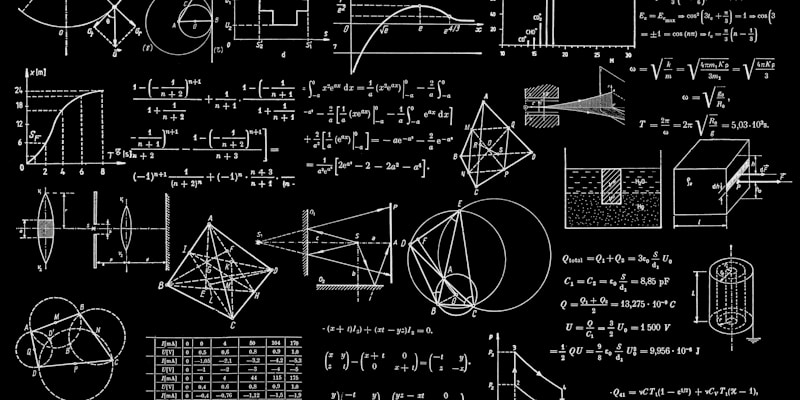
What is the Quantum? Understanding the Basics
What is the Quantum?
Quantum mechanics is the branch of physics that deals with the behavior of matter and energy at the smallest scales—atoms, electrons, photons, and other elementary particles. At these scales, the rules of classical physics break down, and particles behave in ways that seem counterintuitive to our everyday experience.
Key Concepts in Quantum Mechanics
1. Qubits (Quantum Bits)
While classical computers use bits that are either 0 or 1, quantum computers use quantum bits or "qubits." A qubit can exist in a state of superposition, meaning it can be 0, 1, or both simultaneously until it is measured. This fundamental difference allows quantum computers to process information in fundamentally different ways than classical computers.
2. Superposition
Superposition is one of the most important principles in quantum mechanics. It states that a quantum system can exist in multiple states at the same time. Only when measured does the system "collapse" into one of the possible states. This property is what gives quantum computers their potential power—they can explore multiple possibilities simultaneously.
3. Entanglement
Quantum entanglement occurs when two or more qubits become correlated in such a way that the state of one qubit instantly influences the state of another, regardless of the distance between them. Einstein famously called this "spooky action at a distance." Entanglement is crucial for quantum computing's parallel processing capabilities.
4. Quantum Interference
Quantum interference allows quantum algorithms to amplify correct answers and cancel out incorrect ones. By carefully designing quantum algorithms, we can use interference to make the probability of measuring the desired answer very high.
How Quantum Differs from Classical Physics
Classical physics, which governs the behavior of everyday objects, is deterministic—given the same initial conditions, a system will always behave the same way. Quantum mechanics is probabilistic—we can only predict the probability of a system being in a particular state.
Additionally, in classical physics, properties of objects are definite whether or not we observe them. In quantum mechanics, the act of measurement fundamentally affects the system being measured, changing its state.
Practical Applications
While quantum mechanics might seem abstract, it has led to many practical applications:
- Semiconductors and Transistors: Modern electronics rely on quantum mechanical principles
- Lasers: Based on quantum properties of light
- Medical Imaging: PET scans use quantum mechanics
- Quantum Computing: The next frontier in computational power
Conclusion
Understanding the quantum world opens up a new perspective on how nature works at its most fundamental level. The principles of quantum mechanics are not just theoretical—they're reshaping industries and enabling technologies that seemed impossible just a few decades ago.
Subscribe to Our Newsletter
Stay updated with the latest cybersecurity insights and tips.